
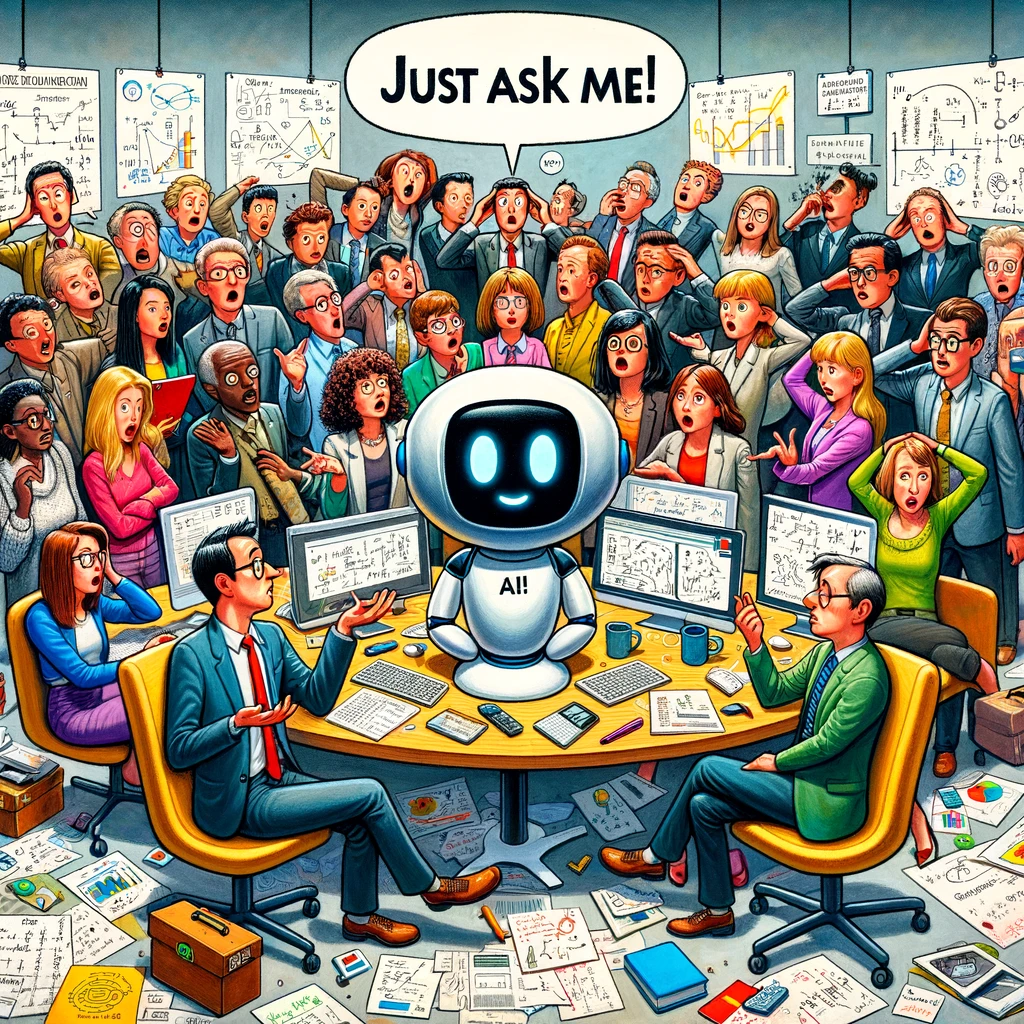
Most people think they’re “bad at AI.”
They’re not.
They’re just treating it like a side quest instead of building a real AI strategy framework for their work.
You’ve got Claude bookmarked. You’ve used ChatGPT during your lunch breaks. Maybe you cloned your voice on ElevenLabs, generated some images with Midjourney, or tried Perplexity for research.
But when Monday morning arrives and that deck is due by 3 PM, that budget needs to be finalized, or that proposal haunts your to-do list, you panic and revert to the same old Word documents and PowerPoint templates.
Here’s what I’ve learned after 18 months of developing an AI strategy framework:
You’re not bad at AI. You’re just thinking too small about what it can do.
The AI strategy framework shift that changed everything for me:
Stop asking: “How can AI help me do this?”
Start asking: “What would this look like if I designed it with AI from the ground up?”
The difference? One treats AI like a fancy spell-checker. The other treats it like a thinking partner within your AI strategy framework.
My AI strategy framework: BUILD → BREAK → REBUILD
BUILD first. Your instincts matter. Writing a draft first matters. Your experience is irreplaceable. Start with what you know.
BREAK it down. This is where most people stop. I bring AI in to challenge my assumptions. Push back on my logic. Reorder my priorities. Make me defend my choices.
If your AI conversations are always polite agreements, you won’t be putting out the best end product.
REBUILD together. Keep what survives the pressure test. Replace what doesn’t. Run it through again. And again. Use Claude to sharpen your writing, Perplexity to challenge your research, and Midjourney to visualize concepts you can’t articulate.
The final product should feel co-created, not outsourced.
Why this AI strategy framework matters:
Because the people winning with AI aren’t the ones with the best prompts.
They’re the ones willing to have their ideas challenged by a machine that never gets tired, never gets ego-bruised, and never stops asking “but what if?”
Your job isn’t to avoid sounding AI-generated.
Your job is to sound like you—but sharper, faster, and more original than you’ve ever been.
Three questions that will change how you work:
- Where am I still doing things the 2019 way out of pure habit?
- What part of my work could become 10x better with the right AI collaboration?
- When was the last time AI surprised me with an idea I hadn’t considered?
The reality check:
The future doesn’t belong to prompt engineers, although one might think that with all the prompt content on social media.
It belongs to the people who can dance with AI, pushing it, questioning it, and letting it push back.
Not the ones who treat it like a better Google search.
Try this week: Pick one project you’d normally tackle solo. Bring AI in at the brainstorm stage, not just the cleanup phase. Let it challenge your assumptions. Let it frustrate you a little.
Because the people AI will replace aren’t the ones who use it wrong.
They’re the ones who never let it change them.