
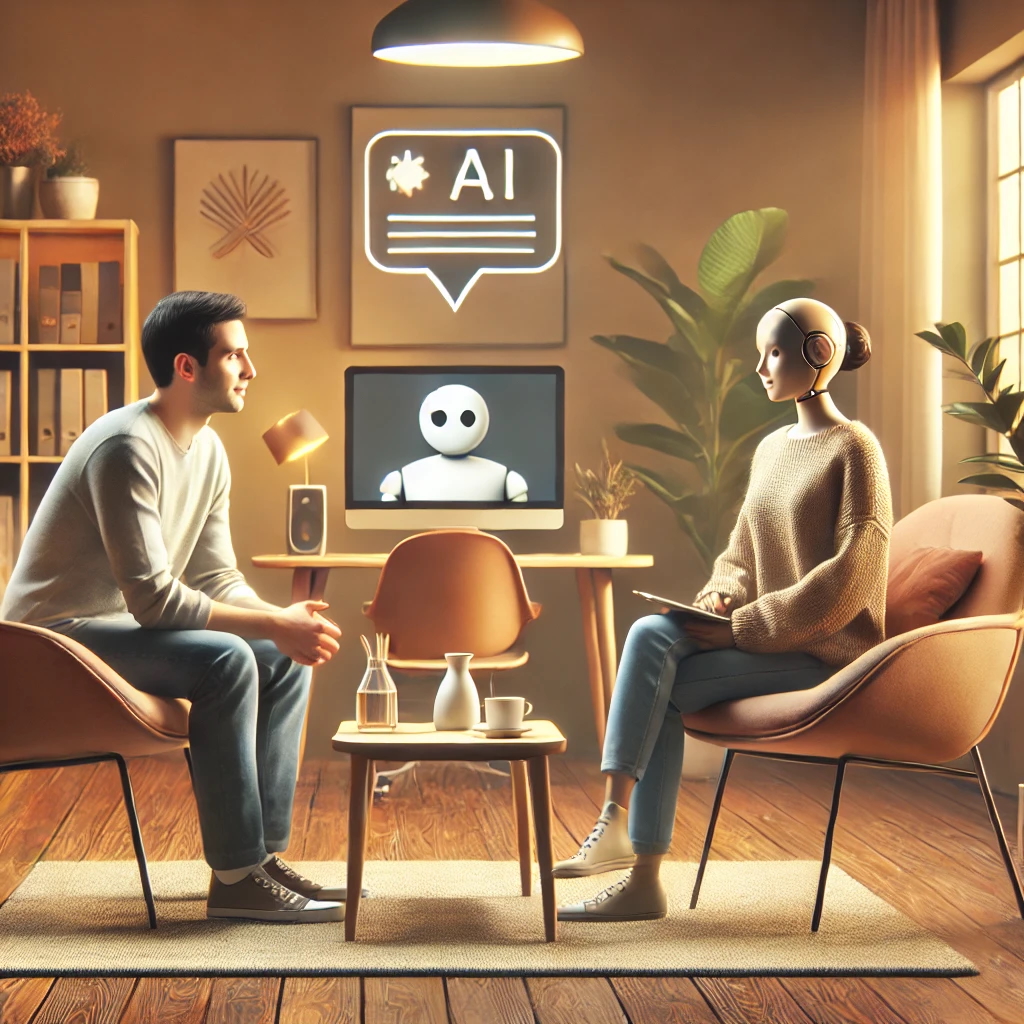
The field of mental health is at a tipping point. With the global shortage of mental health providers expected to reach 1.2 million by 2030, AI in mental health care has begun to step in, transforming care delivery and making therapy more accessible. As an AI enthusiast and mental health advocate, I see these technologies not just as tools but as the next innovation in addressing the many hurdles that patients and providers face.
“A man should not strive to eliminate his complexes but to get into accord with them: they are legitimately what directs his conduct in the world.” — Carl Jung
During my time building doxy.me telemedicine, I witnessed firsthand the growing challenges within mental healthcare. Limited access in rural areas, provider burnout, and stigma preventing care—these hurdles are immense. AI is beginning to answer these calls for change, and it’s already reshaping therapy for patients and providers.
Provider Benefits
For mental health providers, AI offers game-changing support. Burnout is a significant concern—with many clinicians burdened by administrative duties that reduce the time they spend caring for patients. AI tools like Eleos Health are helping by cutting documentation time in half, allowing providers to focus more on meaningful patient interactions. AI-powered assessments like those developed by Limbic have also drastically improved efficiency, reducing wait times by 90% for the UK’s NHS. Here’s the study if you want to read more.
AI can even enhance treatment efficacy. For example, Mindstrong Health uses AI to analyze smartphone usage patterns, such as typing speed and word choice, to detect changes in mental health, enabling more proactive interventions. Woebot Health employs conversational AI to engage with patients, providing personalized therapeutic approaches based on real-time analysis of their responses. Machine learning models can analyze patterns in patient data, helping therapists tailor their approaches in more nuanced ways. This personalization means that therapists can offer treatments that are increasingly precise, improving overall patient outcomes. And as the AI continues to learn, these improvements multiply, offering new insights into patient needs.

Patient Benefits
For patients, the benefits are just as impactful—if not more so. AI makes mental health support more accessible, especially for those in remote areas or those who struggle with stigma. Take Wysa, for instance—a 24/7 AI chatbot offering instant, anonymous emotional support. Such tools help bridge the gap for those who may not feel ready to speak to a therapist directly or can’t access one due to logistical barriers.
AI also opens up opportunities for more personalized treatment. By analyzing individual needs, preferences, and progress, AI can provide customized mental health support. Patients can receive reminders, tailored coping mechanisms, and feedback in real-time, making the therapeutic process more dynamic and responsive.
Children vs. Adults: Is AI Different?
The applications of AI in mental healthcare do differ between children and adults. Children have unique developmental needs that require a careful, nuanced approach. For instance, Cincinnati Children’s Hospital is developing AI tools to predict mental health risks in children, allowing early intervention that is both effective and sensitive to their stage of development. On the other hand, adults may benefit more from AI tools that provide autonomous support or help navigate complex emotions, like the AI-driven mental fitness coaches from Flowlab Inc.
Who is Leading the Charge in AI Mental Health Care?
Companies Transforming Therapy Now
- Wysa: A 24/7 AI chatbot providing instant, anonymous emotional support.
- Limbic: AI-powered psychological assessments reducing NHS wait times by 90%.
- Eleos Health: AI technology cutting clinician documentation time in half.
- Marigold Health: AI-enhanced peer support groups improving treatment adherence.
Technology Coming Soon to AI Mental Health Care 🔮
- Leora Mental Health: Developing fully virtual AI-powered therapists for complex conditions. You can try it now and they have options for companies
- Cincinnati Children’s Hospital: Creating AI tools to predict mental health risks in children.
- Flowlab Inc.: Building personalized AI mental fitness coaches using gamification.
A Global Shortage: Can AI Be the Solution?
With a mounting shortage of mental health providers, AI presents a promising solution. While it won’t replace human therapists, it can fill critical gaps—reducing administrative burdens, offering immediate support, and helping personalize care. In many ways, AI allows clinicians to be more human by taking away the tasks that distract from direct patient care. The question remains: will AI’s integration be enough to alleviate the crisis, or is it just a Band-Aid on a deeper systemic issue? The true test will be what patients and providers say about the AI experience. Humans love speaking with Humans so only time will tell.
Conclusion
Psychoanalyst Carl Jung once spoke about the importance of coming into accord with our complexities, and AI in mental health aims to help us do just that—to understand, process, and ultimately heal. AI is not just about making therapy more accessible or efficient; it’s about enriching the therapeutic experience for both patients and providers, empowering people to overcome barriers they might not have been able to before.
Mental healthcare is evolving, and AI is a significant part of that evolution. The journey beyond the couch has only just begun—the real question is, how far will we let it take us?
If you’re curious to learn more about how AI is transforming mental health, please leave a comment. Let’s continue this conversation and explore the future of mental wellness together.
By Andrew Livingston – AI Innovation & Acceleration
If you want to subscribe my my weekly Innovation with AI newsletter you can subscribe here
Read about AI Innovation in Remote Patient Monitoring and Care next